Ultratrutide vs. Semaglutide vs. Tirzepatide vs. Retatrutide: Which Weight Loss Peptide Is Right for You?
The weight loss peptide landscape has never been more exciting — or more confusing. With new compounds entering the conversation seemingly every year, it can be hard to know what sets each one apart and which option makes the most sense for your goals, lifestyle, and body.
At TruHealth PT, we get these questions all the time: How does Ultratrutide compare to Retatrutide? What about Ozempic or Mounjaro? Why not just use a GLP-1 injection?
In this article, we break down the major players in the GLP-1 space — from single-agonist semaglutide all the way up to the experimental triple-agonist retatrutide — and explain why Ultratrutide remains our top recommendation for most people pursuing sustainable, accessible metabolic health and weight loss.
A Quick Primer: What Are GLP-1 Agonists?
GLP-1 (glucagon-like peptide-1) is a hormone your gut releases naturally after you eat. It tells your brain you’re full, slows gastric emptying, and signals your pancreas to release insulin. GLP-1 receptor agonists are peptides or drugs that mimic or amplify this signal — helping regulate appetite, blood sugar, and fat metabolism.
Over the past several years, pharmaceutical GLP-1 medications have dominated headlines. But they come with significant trade-offs: weekly injections, steep prescription costs, notable side effect profiles, and availability challenges. That’s where sublingual peptide options like Ultratrutide come in — offering a needle-free, accessible, and practical path to real metabolic results.
Now, let’s look at how each major option stacks up.
Semaglutide (Ozempic / Wegovy): The Original GLP-1
Mechanism: GLP-1 receptor agonist (single agonist)
Semaglutide was the drug that put GLP-1 on the mainstream map. As the active ingredient in Ozempic (diabetes) and Wegovy (weight loss), it works by binding to GLP-1 receptors to reduce appetite, slow digestion, and support insulin regulation.
What the Research Shows
Semaglutide is effective — patients on Wegovy’s 2.4 mg dose lost an average of 15% of their body weight over 68 weeks in clinical trials. It also has cardiovascular benefits, with FDA approval to reduce the risk of heart attack and stroke in certain patients.
The Downsides
- Weekly subcutaneous injections
- Significant gastrointestinal side effects (nausea, vomiting, diarrhea) — especially early on
- High cost: often $1,000+ per month without insurance
- Availability shortages have been an ongoing issue
- A black-box warning for rare thyroid tumors (based on animal studies)
- Single-pathway mechanism leaves GIP, glucagon, and ghrelin receptor benefits on the table
- 20–40% of weight lost can come from lean mass rather than fat — including noticeable facial volume loss
As a single-agonist injectable with a high cost barrier, needle requirement, and no lean mass protection, semaglutide isn’t the most practical or comprehensive choice for most people — even if it was the compound that started it all.
Tirzepatide (Mounjaro / Zepbound): The Dual Agonist Step Forward
Mechanism: GLP-1 + GIP dual receptor agonist
Tirzepatide represented a meaningful leap forward by targeting two metabolic pathways at once. In addition to GLP-1 signaling, it activates GIP receptors, which enhance insulin secretion further and play a direct role in fat cell metabolism.
What the Research Shows
Head-to-head trials paint a clear picture of tirzepatide’s advantage over semaglutide. In the Surmount-5 Phase 3b trial, patients on tirzepatide lost an average of 20.2% of their body weight compared to 13.7% for semaglutide — a 47% greater reduction. Tirzepatide patients were also three times more likely to achieve 15% or greater weight loss in real-world studies.
The Downsides
- Still injection-based with weekly shots
- Can cause pronounced gastrointestinal side effects at higher doses
- Prescription-only and expensive — similar cost range to Wegovy without insurance
- Requires a healthcare provider, titration schedule, and ongoing monitoring
- The same black-box thyroid tumor warning applies
- Still produces significant lean mass loss — the “Ozempic face” problem persists with dual agonists too
Tirzepatide is a genuine step up from semaglutide, but it’s still an injectable prescription drug with significant cost, access, and body composition trade-offs.
Retatrutide: The Triple Agonist
Mechanism: GLP-1 + GIP + Glucagon receptor triple agonist
Retatrutide — developed by Eli Lilly — adds a third receptor pathway to the mix: glucagon (GCGR). Glucagon activation increases energy expenditure, meaning the body burns more calories at rest, which amplifies fat loss beyond what dual agonists achieve.
What the Research Shows
The results are genuinely impressive. In a Phase 2 obesity trial, retatrutide at its highest dose produced an average weight loss of 24.2% over 48 weeks — some of the largest numbers recorded in a peptide trial to date. More recently, Phase 3 TRIUMPH-4 trial data demonstrated substantial weight loss alongside meaningful relief from knee osteoarthritis pain.
The Downsides
- Weekly injectable — same logistics and administration challenges as Ozempic and Mounjaro
- Requires a prescription and ongoing medical supervision
- High cost without insurance coverage
- Like all pure incretin approaches, it does nothing to address lean mass loss or GI discomfort — the two leading reasons people discontinue therapy regardless of how well the weight loss works
Retatrutide is exciting and available, but it still shares the fundamental trade-offs of the incretin class — and still leaves the body composition and tolerability problems unsolved.
Ultratrutide: The Best Overall Choice
Mechanism: GIP + GLP-1 + Glucagon + GHS-R1a (ghrelin) quad-receptor agonist — sublingual delivery
So where does Ultratrutide fit in? It doesn’t just match the most advanced incretin backbone available — it goes beyond it. Ultratrutide is built on a retatrutide-class triple agonist (GIP + GLP-1 + glucagon) and adds a fourth receptor target: a peripherally-restricted ghrelin fragment designed to solve the two biggest problems that cause people to quit GLP-1 therapy altogether.
A Fourth Receptor That Changes Everything
Every peptide on this list shares the same two core problems: GI discomfort from slowed gastric emptying, and lean mass loss including facial volume. These aren’t side effects that improve with dose adjustments — they’re built into the mechanism of pure incretin agonism.
Ultratrutide addresses both at the receptor level. Its peripherally-restricted ghrelin fragment targets GHS-R1a receptors in the gastric wall and pituitary — normalizing gastric motility to support comfortable digestion, and triggering pulsatile growth hormone release to preserve lean muscle and facial volume during weight loss. The fragment is engineered as a partial agonist that stays out of the brain, so it supports digestion and GH release without increasing hunger.
No other peptide in this comparison does this.
No Needles, No Excuses
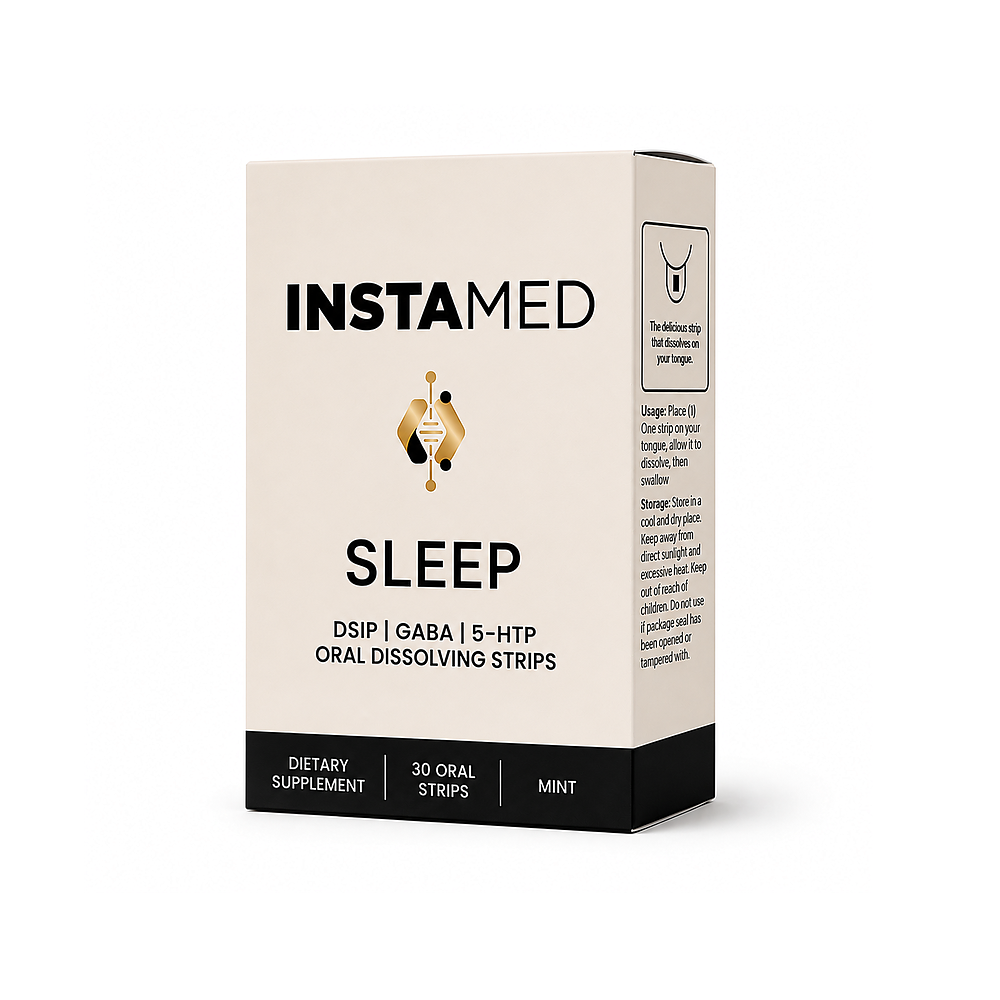
Ultratrutide is delivered via a fast-dissolving sublingual strip — place it under your tongue, let it dissolve in 1–2 minutes, and you’re done. No syringes, no refrigeration logistics, no injection site anxiety. For most people, a treatment they’ll actually do consistently beats a more powerful option they dread or avoid.
Bioavailability That Competes
Our Instamed® sublingual strips with InstaRelease® technology deliver a bioavailability of up to 92% — meaning a very high percentage of the active compound reaches your bloodstream intact, bypassing the digestive degradation that oral pills face while skipping the needle entirely.
Quad-Pathway Metabolic Action
Ultratrutide’s four receptor targets work together to deliver:
- Appetite regulation and reduced hunger signaling (GLP-1, GIP)
- Improved insulin sensitivity and glucose balance (GLP-1, GIP)
- Enhanced energy expenditure and fat mobilization (glucagon)
- Normalized gastric motility and digestive comfort (GHS-R1a)
- Lean muscle preservation during weight loss (GHS-R1a → GH release)
- Facial volume support during weight loss (GHS-R1a → GH release)
- More stable energy levels throughout the day
Accessibility and Affordability
At $250 for a 30-day supply, Ultratrutide is dramatically more accessible than pharmaceutical GLP-1 injectables, which routinely cost $1,000 or more per month without insurance. No prescription, no insurance approval, no pharmacy waitlist. Order online and have it shipped anywhere in the United States.
Who Should Consider Ultratrutide?
Ultratrutide is an excellent fit if you:
- Want comprehensive quad-receptor metabolic support without weekly injections
- Are looking for an accessible, affordable option that doesn’t require a prescription
- Have tried GLP-1 medications but struggled with nausea, GI discomfort, or lean mass loss
- Want to protect muscle and facial volume while losing weight
- Are pursuing sustainable fat loss with support for blood sugar and insulin sensitivity
- Want a discreet, convenient daily format you can stick with long-term
- Are curious about next-generation metabolic peptides but not ready for pharmaceutical injectables
The Bottom Line
Semaglutide, tirzepatide, and retatrutide are all proven tools with real clinical data behind them. But they all share the same fundamental trade-offs: injections, prescription requirements, high costs, and a mechanism that doesn’t protect lean mass or support comfortable digestion.
Ultratrutide offers something none of them do — a quad-receptor approach that targets fat loss and the two biggest reasons people quit GLP-1 therapy, delivered in a needle-free sublingual strip without a prescription and at a fraction of the cost.
These statements have not been evaluated by the Food and Drug Administration. This product is not intended to diagnose, treat, cure, or prevent any disease.
Call/Text us at any time for more information or to order you Instamed® Oral Dissovling Peptide Strips today:
(801) 318-4260