DSIP vs. Melatonin: What’s the Difference?
Melatonin is a hormone that signals your body it’s time to sleep, primarily supporting sleep onset, while DSIP (Delta Sleep-Inducing Peptide) is associated with supporting the structure and quality of the sleep you get once you’re in it. They’re not really competing products — they support two different parts of the sleep process, which is why some people use them for genuinely different reasons, and why a formula that includes both DSIP and a melatonin-pathway ingredient can address more of the picture at once.
Melatonin: The Sleep Signal
Melatonin is the hormone most people already associate with sleep, and for good reason — it’s the primary chemical signal your brain uses to tell your body it’s time to wind down. Your body naturally produces more melatonin as it gets dark, which is part of why light exposure (especially from screens) at night can interfere with sleep onset. Supplemental melatonin is widely used specifically to help people fall asleep faster, particularly when their natural circadian signal is disrupted — jet lag, shift work, or irregular schedules are classic examples.
Where melatonin tends to fall short for some people is after sleep onset. It’s associated with helping you get to sleep, not necessarily with the depth or structure of the sleep you get once you’re there.
DSIP: Support for Sleep Structure
DSIP was first identified in research on brain activity during deep sleep — its name literally comes from its association with delta-wave brain activity, the slow-wave pattern that characterizes the deepest, most restorative stage of sleep. Rather than signaling sleep onset the way melatonin does, DSIP is associated with supporting the natural structure and quality of your sleep cycles once you’re already asleep.
This is also why DSIP is often described as “support, not sedation.” It’s not designed to force you into sleep the way a sedative would — it’s associated with supporting your body’s own sleep architecture, working with your natural sleep process rather than overriding it.
The Core Difference: Onset vs. Structure
If you had to boil it down to one distinction: melatonin is about falling asleep, and DSIP is about the quality of the sleep you get once you’re there. Someone who falls asleep easily but wakes up feeling unrested may be dealing with a sleep-structure issue that melatonin isn’t really designed to address. Someone who lies awake for hours before finally drifting off may be dealing more with a sleep-onset issue, where melatonin’s signal-based mechanism is more directly relevant.
Why Some Formulas Combine Both Approaches
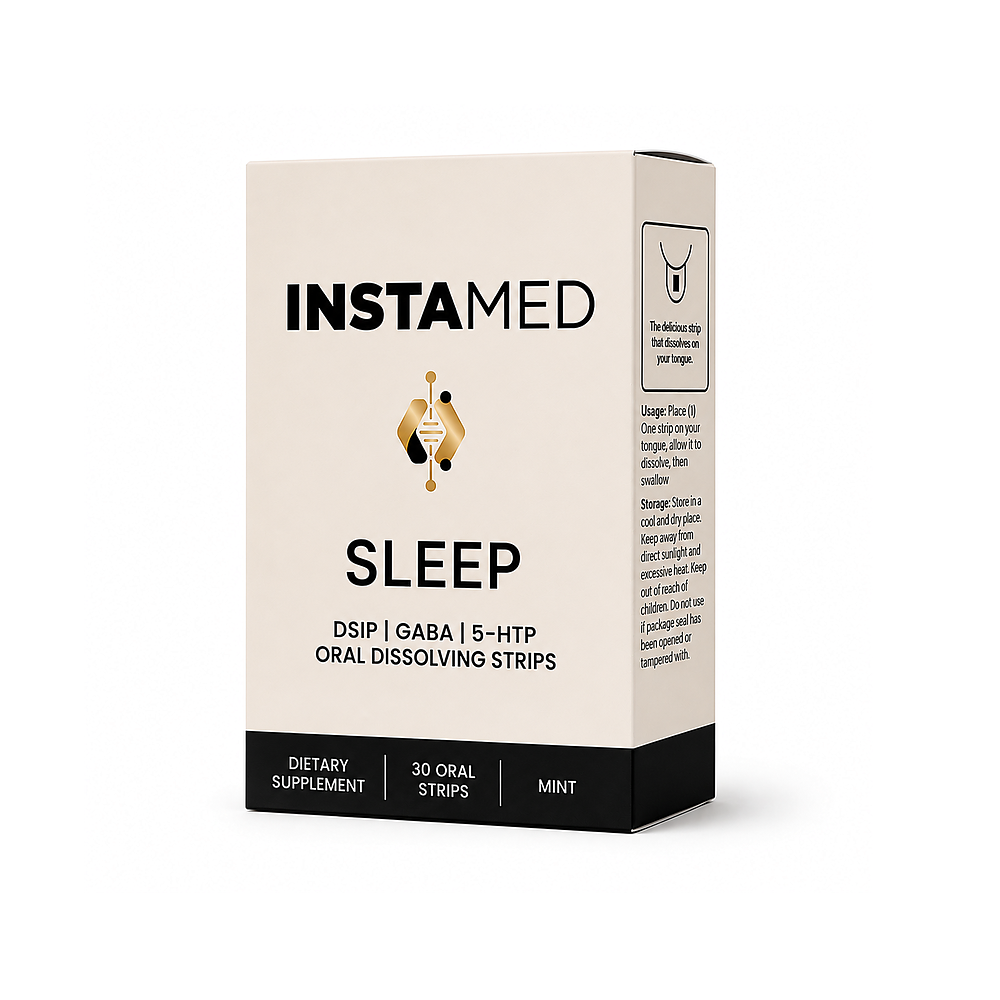
Because these two ingredients address different parts of the sleep process, some sleep-support formulas — including ours — combine DSIP with 5-HTP, which supports your body’s natural serotonin-to-melatonin pathway, alongside GABA for calm. This means you’re not choosing between “onset support” and “structure support” — you’re supporting both pathways in one strip.
Our DSIP (with GABA & 5-HTP) sublingual strip is built around exactly this logic: DSIP for sleep architecture, GABA for the calm that helps you wind down in the first place, and 5-HTP to support the same natural melatonin pathway that supplemental melatonin targets directly — all without the “one-note” approach of a melatonin-only product.
Which One Might Be Right for You?
If your main struggle is falling asleep — a racing mind, trouble winding down, or a disrupted schedule — melatonin’s onset-focused mechanism may be the more directly relevant tool.
If you fall asleep fine but don’t wake up feeling rested, or you’re looking for something beyond a single-hormone approach, DSIP’s association with sleep architecture may be more relevant to what you’re actually trying to fix.
If you’re not sure, or if it’s genuinely both, a combined formula addressing multiple pathways at once may make more sense than picking a single-ingredient product and hoping it covers everything.
What to Realistically Expect
Neither melatonin nor DSIP works like a sedative — don’t expect to feel “knocked out.” Most people using DSIP-based formulas report an easier wind-down within the first few nights, with more consistent benefits building over one to two weeks of nightly use. Consistency matters more than any single dose, since both are designed to work with your body’s natural sleep-related processes rather than force an outcome.
Getting Started
If you’re trying to figure out whether DSIP, melatonin, or a combined approach makes the most sense for your specific sleep concerns, our team is happy to walk through it with you.
Ready to give it a try? Explore InstaMed DSIP (with GABA & 5-HTP). We’re here to help you make sense of your nightly routine, one strip at a time.
These statements have not been evaluated by the Food and Drug Administration. This product is not intended to diagnose, treat, cure, or prevent any disease. This peptide has also not been approved by the FDA for human consumption and should be used for research purposes only. Use of this peptide for any other reason is at your own risk and is not recommended nor approved by the FDA. Consult with a qualified healthcare provider before beginning any supplementation protocol.