
Oral vs Injectable Peptides

Peptide therapy has three delivery methods: injectable, oral (capsules/pills), and sublingual strips. For years, injections were considered the only serious option. Pills were dismissed for good reason — swallowed peptides are largely destroyed by stomach acid and digestive enzymes before they ever reach your bloodstream. And until recently, sublingual delivery wasn’t formulated well enough to compete with needles.
That’s changed. TruHealth PT’s sublingual peptide strips now deliver up to 92% bioavailability — rivaling injectable delivery for most systemic applications, without a single needle. Here’s an honest breakdown of all three methods and why strips have become our delivery format of choice.
The Three Types of Peptide Delivery
Injectable Peptides are deposited into subcutaneous fat or muscle tissue via syringe, bypassing the digestive system entirely. They’ve long been the gold standard for bioavailability and remain the preferred option for highly localized applications — injecting near a specific injured tendon, for example. The downsides are real: daily injections require proper technique, refrigerated storage, syringes, and a level of discipline that many people find hard to sustain over a 90-day protocol.
Oral Peptides (Capsules/Pills) are the most convenient format on paper, but the least effective in practice. Swallowed peptides face a brutal gauntlet — stomach acid, proteolytic enzymes, intestinal membrane barriers, and liver first-pass metabolism — that destroys most of the active compound before it reaches circulation. For the majority of therapeutic peptides, pills simply aren’t a viable delivery route.
Sublingual Strips are a fundamentally different category from pills. Rather than being swallowed, a dissolving strip is placed under the tongue where peptides absorb directly through the thin, highly vascularized mucosal tissue straight into the bloodstream — bypassing the GI tract and liver metabolism entirely, just like an injection, but without the needle. TruHealth PT’s strips use InstaRelease™ technology to dissolve in minutes and achieve up to 92% bioavailability. No water, no refrigeration, no needles. To understand the full science behind how sublingual absorption works, read our guide to oral peptide delivery.
Why Strips Beat Injections for Most People
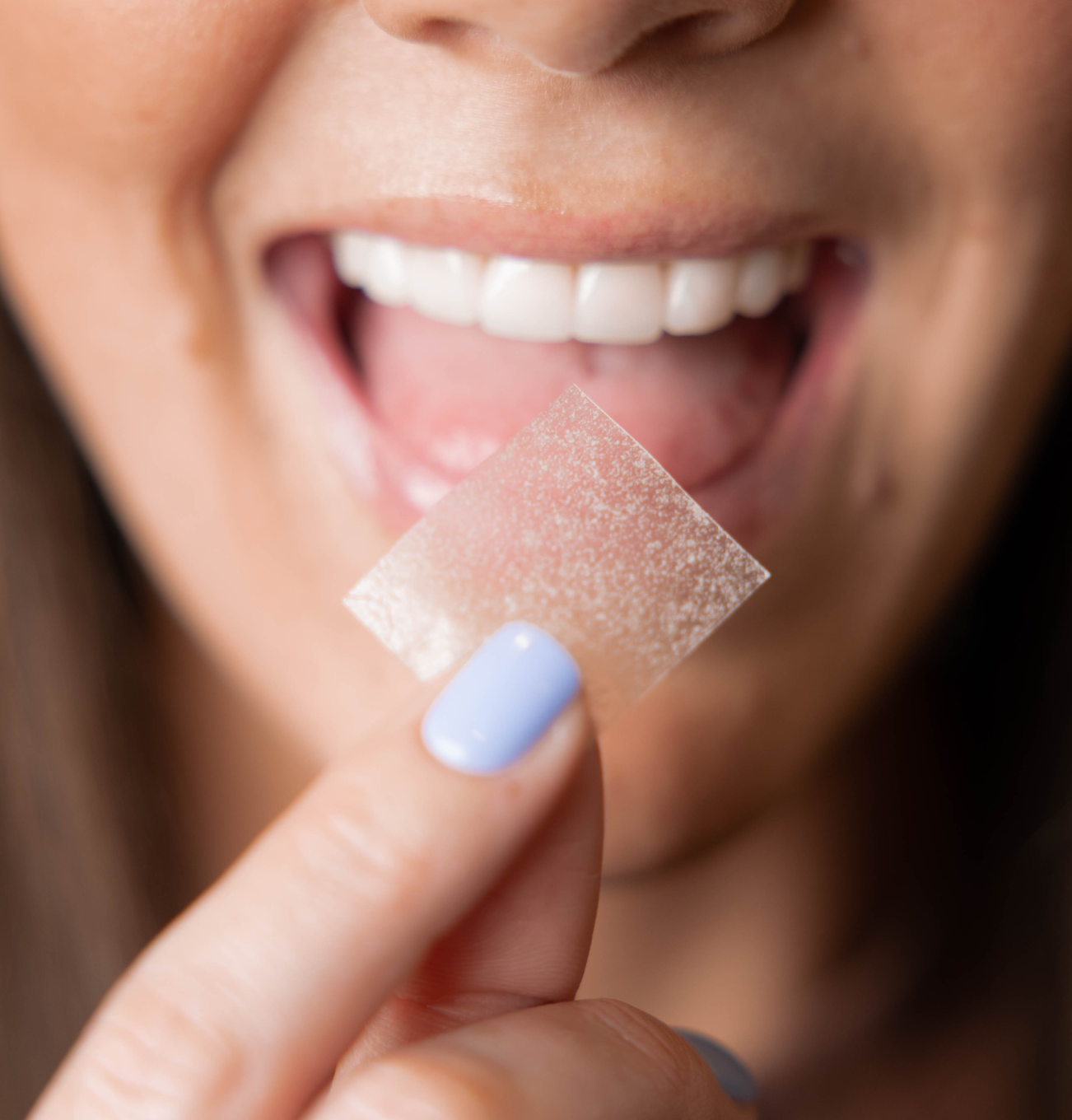
Injections have a bioavailability edge in clinical settings where exact peak plasma concentrations matter. But in real-world wellness protocols, compliance is what actually drives results. A patient who uses their sublingual strip every single morning without friction will consistently outperform a patient who skips injections several times a week. Strips require nothing but placing them under your tongue — no supplies, no technique, no storage requirements — making consistency effortless.
For systemic goals like recovery, hormone optimization, immune support, cellular energy, and skin health, sublingual strips now deliver results that are comparable to injectable protocols for most users, with a dramatically lower barrier to daily use.
When Injections Are Still Worth Considering
Sublingual strips are the better choice for most people, but we believe in giving you the full picture. There are specific scenarios where injectable peptides still have a clinical edge. If you’re working with a physician on a targeted orthopedic protocol — injecting BPC-157 near a specific joint or tendon, for example — the ability to concentrate a dose at a precise injury site is difficult to replicate with any systemic delivery method. Very large peptide molecules can also be harder to transport across mucosal tissue, even with advanced formulation technology. And in clinical loading protocols where a practitioner needs rapid, predictable peak plasma concentrations, injections remain the controlled choice.
For most people reading this, those scenarios don’t apply. But if you’re already on an injection-based protocol with a provider, sublingual strips can often work alongside it — as a daily maintenance layer that keeps your peptide levels consistent between injection sessions.
The Role of Peptides in the Body
Understanding why delivery method matters starts with understanding what peptides actually do. Peptides are short chains of amino acids — the same building blocks that make up proteins, but smaller and more targeted in how they interact with the body. Your body naturally produces thousands of its own peptides to regulate critical functions: growth hormone secretion, immune response, tissue repair, cellular energy metabolism, inflammation control, and skin regeneration. Therapeutic peptides work by mimicking or amplifying these naturally occurring signals, targeting specific receptors with a precision that broader pharmaceutical compounds can’t match. Because they act on pathways the body already uses, well-formulated peptides tend to have favorable tolerability profiles. The catch has always been getting them into your system intact — which is exactly what delivery method determines.
Our Sublingual Peptide Lineup

Every peptide we carry is available as a sublingual strip — no injections required.
BPC-157 is one of the most researched recovery peptides available, supporting tissue repair, gut healing, and inflammation reduction. Sublingual delivery is particularly well-suited for gut and systemic recovery applications.
NAD+ is the body’s cellular energy currency, essential for DNA repair and mitochondrial function. Standard oral NAD+ supplements degrade in the GI tract before absorbing — sublingual delivery is one of the most meaningful upgrades available for this compound.
CJC-1295 + Ipamorelin stimulates your body’s natural growth hormone production, supporting lean muscle, fat metabolism, sleep quality, and recovery. Because the goal is systemic hormonal signaling, sublingual strips are an ideal delivery format.
GHK-Cu is a copper peptide that stimulates collagen production and cellular renewal. Its small molecular size makes it one of the most bioavailable peptides for sublingual delivery, making it a natural fit for anti-aging and skin health goals.
PT-141 works centrally through the nervous system to support sexual health and libido in both men and women. Since it requires systemic absorption rather than local tissue delivery, sublingual strips are an ideal — and discreet — format.
Thymosin Alpha-1 is a thymus-derived peptide that regulates T-cell function and immune balance. For ongoing immune maintenance, the daily consistency that sublingual strips enable makes them an excellent fit.
Glutathione is the body’s master antioxidant. Swallowed glutathione supplements are largely degraded before absorbing — sublingual delivery is genuinely superior to capsules and gives this powerful compound a real pathway into your system.
Ready to Try Sublingual Peptide Therapy?

All of TruHealth PT’s sublingual peptide strips are available for purchase online and shipped anywhere in the United States, or in person at our Provo, Utah clinic. Browse our full sublingual peptides lineup and find the right peptide for your goals — no prescription, no needles, no hassle.
Frequently Asked Questions
Are injectable peptides better than oral capsules or strips? Injectable peptides beat swallowed capsules in almost every case — pills simply can’t deliver most peptides effectively. Sublingual strips are a different story. By absorbing through oral mucosal tissue rather than through the GI tract, strips bypass the same digestive barriers as injections and achieve comparable bioavailability for most systemic applications.
Is sublingual as effective as injections? For the majority of wellness, recovery, and optimization goals, yes. TruHealth PT’s InstaRelease™ strips achieve up to 92% bioavailability. Where injections retain an edge is in highly localized delivery — injecting near a specific injury site — but for systemic peptide therapy, strips are competitive and far more practical.
Can I switch from injections to sublingual strips? Many people do. Sublingual strips are particularly popular as a transition from injectable loading phases into daily maintenance. Talk to your healthcare provider about managing the switch for your specific protocol.
Call/Text us at any time for more information or to order you Instamed® Oral Dissovling Peptide Strips today:
(801) 318-4260