Oral DSIP vs Injectable DSIP: Which Delivery Method Should You Choose?
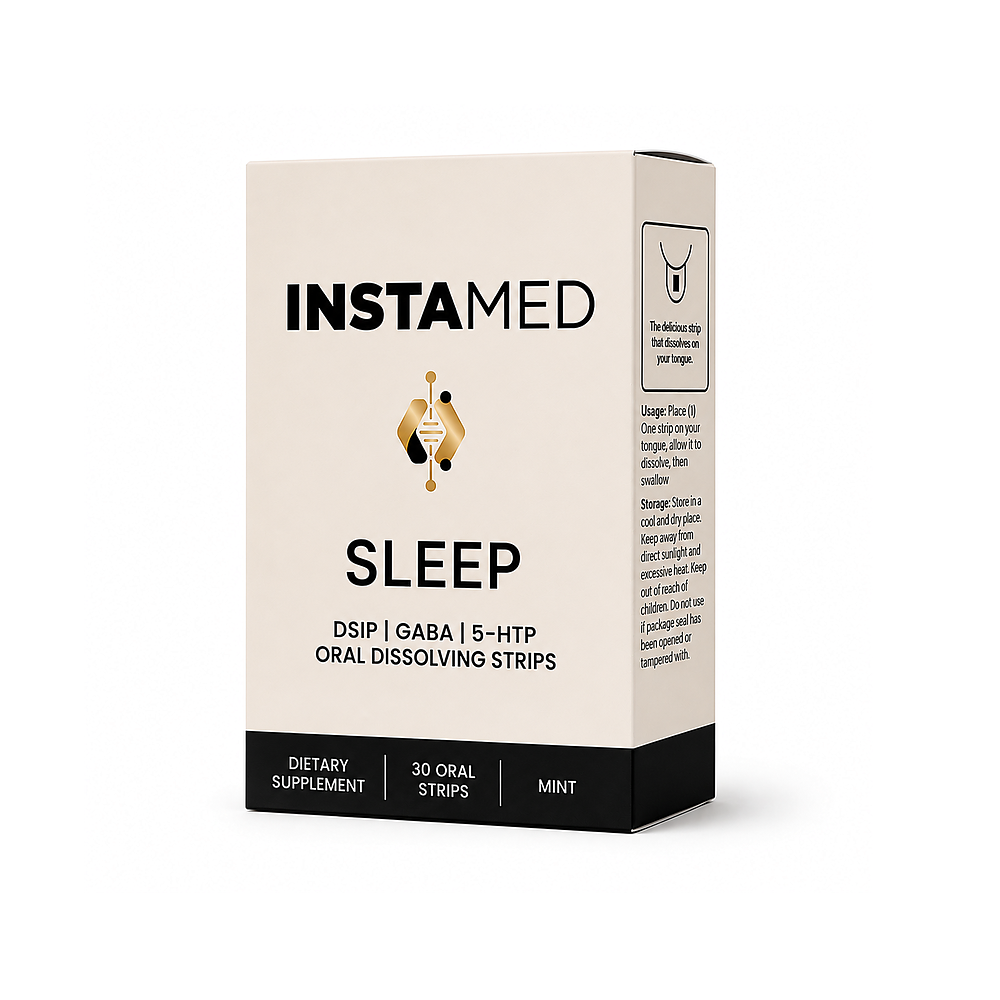
Oral (sublingual) DSIP is the more practical choice for most people — it delivers the same peptide through a fast-dissolving strip under the tongue instead of a nightly injection, with no needles, no reconstitution, and no refrigerated vials to manage. Both forms deliver the same compound; the real difference comes down to convenience, routine, and how each fits into a nightly habit you’re meant to stick with consistently.
What DSIP Does
DSIP (Delta Sleep-Inducing Peptide) is associated with supporting deeper, more restorative sleep architecture — the stages of sleep tied to physical recovery and feeling rested the next day, not just falling asleep faster. It’s typically paired with GABA and 5-HTP in a sleep-support routine, working alongside the same calming and serotonin-to-melatonin pathways rather than acting as a sedative on its own.
Because DSIP’s value comes from consistent nightly use rather than a single dose, the delivery method matters more here than it does for a peptide you might only use occasionally.
How Injectable DSIP Works
Injectable DSIP is administered via subcutaneous injection, typically before bed. Like most injectable peptides, it requires reconstituting the peptide, drawing an accurate dose, and self-injecting — every night, if you’re using it as part of an ongoing sleep routine. It also requires proper storage and handling to keep the peptide stable between uses.
For some people, injectable delivery isn’t a dealbreaker. But for something meant to become a nightly habit, the extra steps add real friction over time.
How Oral (Sublingual) DSIP Works
Sublingual DSIP comes as a fast-dissolving strip that you place under your tongue before bed. It’s designed to absorb directly through the tissue there, bypassing the digestive breakdown that would otherwise limit an oral capsule or pill. There’s no reconstitution, no needles, and nothing to draw or measure — you place the strip, let it dissolve, and you’re done.
For a nightly routine, that simplicity is the whole point: the easier something is to stick with, the more likely it actually gets used consistently.
Comparing the Two Methods
Convenience: Sublingual wins clearly here. No mixing, no needles, no sharps disposal — just a strip before bed.
Consistency of use: Because sublingual removes the friction of injecting, it tends to be easier to use night after night, which matters for a peptide that depends on consistent use.
Storage and handling: Sublingual strips are generally easier to store and travel with than injectable vials that may require refrigeration.
Onset: Both forms are used before bed as part of a wind-down routine, with users typically incorporating either form into their existing nightly habits.
Why Most People Choose Oral DSIP
For a sleep-support peptide meant to be used consistently, most people find that the lower-friction option — one they’ll actually stick with every night — outperforms one that’s marginally more “clinical” but harder to maintain as a habit. That’s a major reason oral/sublingual DSIP has become the more popular starting point for people exploring it.
Who Might Still Consider Injectable DSIP
Injectable DSIP may appeal to people who are already comfortable with self-injection as part of a broader peptide protocol and prefer to keep their entire routine in that format.
Who Oral DSIP Is Right For
Oral DSIP is a strong fit for people who:
- Want a nightly sleep-support routine they’ll realistically stick with
- Are new to peptides and want to avoid needles altogether
- Travel often and want something simple to bring along
- Already use GABA or 5-HTP and want a combined, convenient format
Getting Started with Oral DSIP
If you’re weighing your options between oral and injectable DSIP, our team is happy to walk through what a realistic nightly routine looks like with each.
Ready to give it a try? Explore our InstaMed Sleep DSIP strips. We’re here to help you build a routine you’ll actually stick with, one strip at a time.
None of the statements on this page/article/post have been evaluated by the Food and Drug Administration. These peptides are not intended to diagnose, treat, cure, or prevent any disease. These peptides have also not been approved by the FDA for human consumption and should be used for research purposes only. Use of this peptide for any other reason is at your own risk and is not recommended nor approved by the FDA. Consult with a qualified healthcare provider before beginning any supplementation protocol.